


About 500 light years away from Earth, within the constellation Cygnus, is a planet with the catchy name of Kepler-186f. This planet is about the size of Earth and completes its orbit around a red dwarf star—half the size and mass of our own sun—every 130 days.
More importantly, it’s the first planet ever discovered that falls within the “Goldilocks” zone, meaning that it’s just the right distance away from its orbited star that water on its surface should be in liquid form, if the planet is rocky as Astrobiologists suspect. There have been other planets in the same hospitable zone, but they’re all “at least 40 per cent larger in size than Earth,” says NASA, which makes their geography difficult to study and understand.
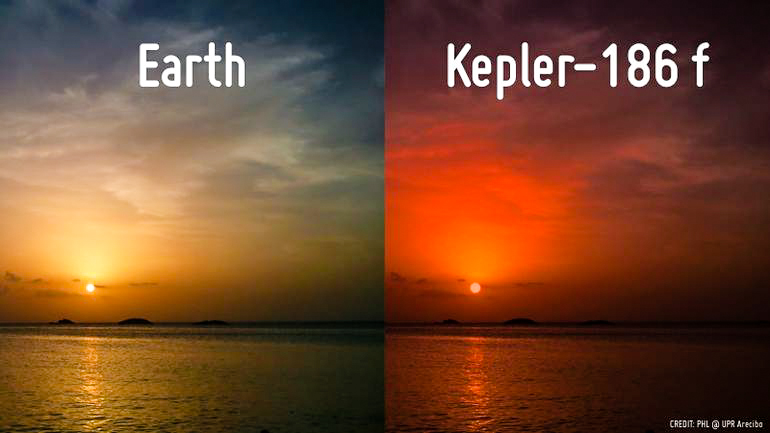
A Kepler-186f sunset appears dimmer, but the sun is larger.
The discovery of Kepler-186f furthers the search for extra-terrestrial life because it establishes the existence of other Earth-like planets in the universe—something that astrobiologists have believed for a long time, but have never actually been able to prove.
This is paramount because planets similar to our own Earth are the most likely to sustain intelligent life that would be recognizable to us. Finding water is especially significant because it has particularly unique physical properties that make it the only solvent that facilitates the mixing of organic compounds necessary for carbon-based life forms to function. And though it’s entirely possible for an alien species not to be carbon-based, the fact that carbon is one of the most plentiful elements in the universe makes it a safe bet for the intelligent life search.
There’s still a long way to go, despite the planet’s discovery. Rather than being a bonafide Earth twin, Kepler-186f is merely a cousin; it’s very similar, but the fact that it doesn’t orbit a G-dwarf star like our own sun makes it not quite the same.
Regardless it’s one giant leap forward to solving one of the greatest mysteries of our universe.
UIP Summary
So, another week goes by and another planet has been discovered, similar to Planet Earth! This is all fantastic news and I know we are all appreciating the efforts that are being put into finding other habitable planets. Such exciting times, something which would of felt like Science Fiction when I was a child…..Science Fiction is very much becoming Science FACT more and more these days, isn’t it exciting!
But, we at UIP also believe that there may be a hidden agenda behind all of this searching for Habitable Planets. Perhaps, just perhaps this is part of a build up to some form of Disclosure! So when this planet wakes up to the fact that ‘we are not Alone’ perhaps specific world leaders might turn around and say ‘well we never said that we were alone, heck we even invested heavily in discovering life on other planets out there!’ It very much does feel like we, the Human race, are being built up to something significant!
But remember people. truth be known our ‘so-called’ leaders have ‘probably’ known the truth for a very long time…..we just got to keep pushing for the truth as its all of our Universe and our right to know who our ET neighbours are!
UIP
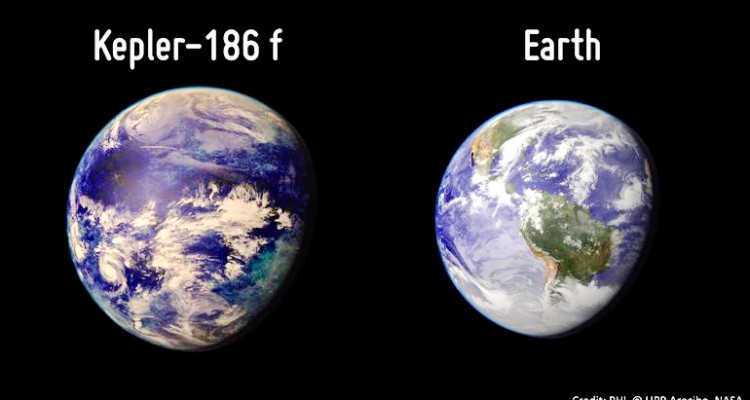
A new cousin of earths has been found?